

Life Insurance with Sleep Apnea
Find out about what life insurance with sleep apnea looks like. Talk to one of our experienced advisors, today!
13 minute read
Originally Published: February 17, 2022
Updated: May 24, 2023

Life Insurance with Sleep Apnea in Canada
Find out about what life insurance with sleep apnea looks like. Talk to one of our experienced advisors, today!
13 Minute read
Originally Published: February 17, 2022
Updated: May 24, 2023
Getting life insurance with Sleep Apnea is possible, there are many types of insurance, affordable prices, and different packages. Sleep apnea is a sleep-related medical condition that is rising in diagnosis and becoming more prevalent amongst even young people. Statistics show that in Canada the rate of patients who are being diagnosed with sleep apnea by medical professionals is growing. The good news is there are lots of insurance companies that are okay with covering people who have sleep apnea. So if you or someone you know has this condition, there are things you should know when looking for a life insurance policy.
Two outcomes of sleep apnea are disturbing a partner with loud snoring, and being exhausted during the day. While these may seem trivial to some, sleep apnea is serious, and ignoring it can result in hypertension, lung damage, heart difficulties, a loss of focus, and an increased risk of car accidents. This has led many of our clients with this condition to worry that they won’t qualify for affordable rates for life insurance. A common question we get is “can I get life insurance with sleep apnea?”

Yes! You can get life insurance with sleep apnea and the sooner the better. As mentioned, sleep apnea can lead to more serious health consequences which may complicate your application process if you delay your coverage.
In this article:
- What is sleep apnea?
- A Case Study of Rav – Navigating Life Insurance with Sleep Apnea
- How common is sleep apnea?
- How does sleep apnea affects life insurance coverage
- Evaluation Factors for Life Insurance Applications in Individuals with Sleep Apnea
- Best life insurance policies if you have sleep apnea
- The cost of life insurance with sleep apnea
- What happens if you get diagnosed with sleep apnea while having life insurance
- Frequently Asked Questions (FAQ) about Sleep Apnea and Life Insurance
What is Sleep Apnea?
Sleep apnea is a chronic sleep-related breathing condition that affects both males and females. Patients affected with sleep apnea experience a decrease in their breathing or completely stop breathing for a short period of time while they sleep. These short periods of breathing difficulties are called apneas, and sleep apnea leads to repetitive apneas throughout the night.
Types of Sleep Apnea
There are three main types of sleep apnea:
- Obstructive Sleep Apnea (OSA): The most common form, caused by a blockage of the airway when the soft tissue in the back of the throat collapses during sleep.
- Central Sleep Apnea (CSA): Unlike OSA, the airway isn’t blocked, but the brain fails to signal the muscles to breathe due to instability in the respiratory control center.
- Complex Sleep Apnea Syndrome (CompSAS): Also known as treatment-emergent central sleep apnea, it occurs when someone has both OSA and CSA.
Symptoms: Common symptoms include loud snoring, episodes of breathing cessation during sleep, abrupt awakenings accompanied by shortness of breath, dry mouth or sore throat upon waking, and excessive daytime sleepiness.
Diagnosis and Treatment: Diagnosis typically involves a sleep study, either at home or in a sleep lab. Treatment options range from lifestyle changes, like losing weight or quitting smoking, to medical devices like a CPAP machine that keeps your airway open while you sleep. In more severe cases, surgery may be necessary.
Risk Factors and Complications: Anyone can develop sleep apnea, though certain factors increase risk, such as obesity, age, family history, use of alcohol or sedatives, and smoking. If left untreated, sleep apnea can lead to serious complications like high blood pressure, stroke, heart problems, diabetes, depression, and worsening of ADHD.
Living with Sleep Apnea: People with sleep apnea can lead normal lives with proper treatment. They might need to use special devices while sleeping, avoid certain positions, or make lifestyle changes. Ensuring good sleep hygiene, managing stress, and regular follow-ups with healthcare professionals are also key.
Remember, sleep apnea is a chronic condition that requires long-term management. Effectively treating sleep apnea can lead to better overall health, improved sleep, less daytime fatigue, and lower risk of other related health issues.
A Case Study of Rav – Navigating Life Insurance with Sleep Apnea
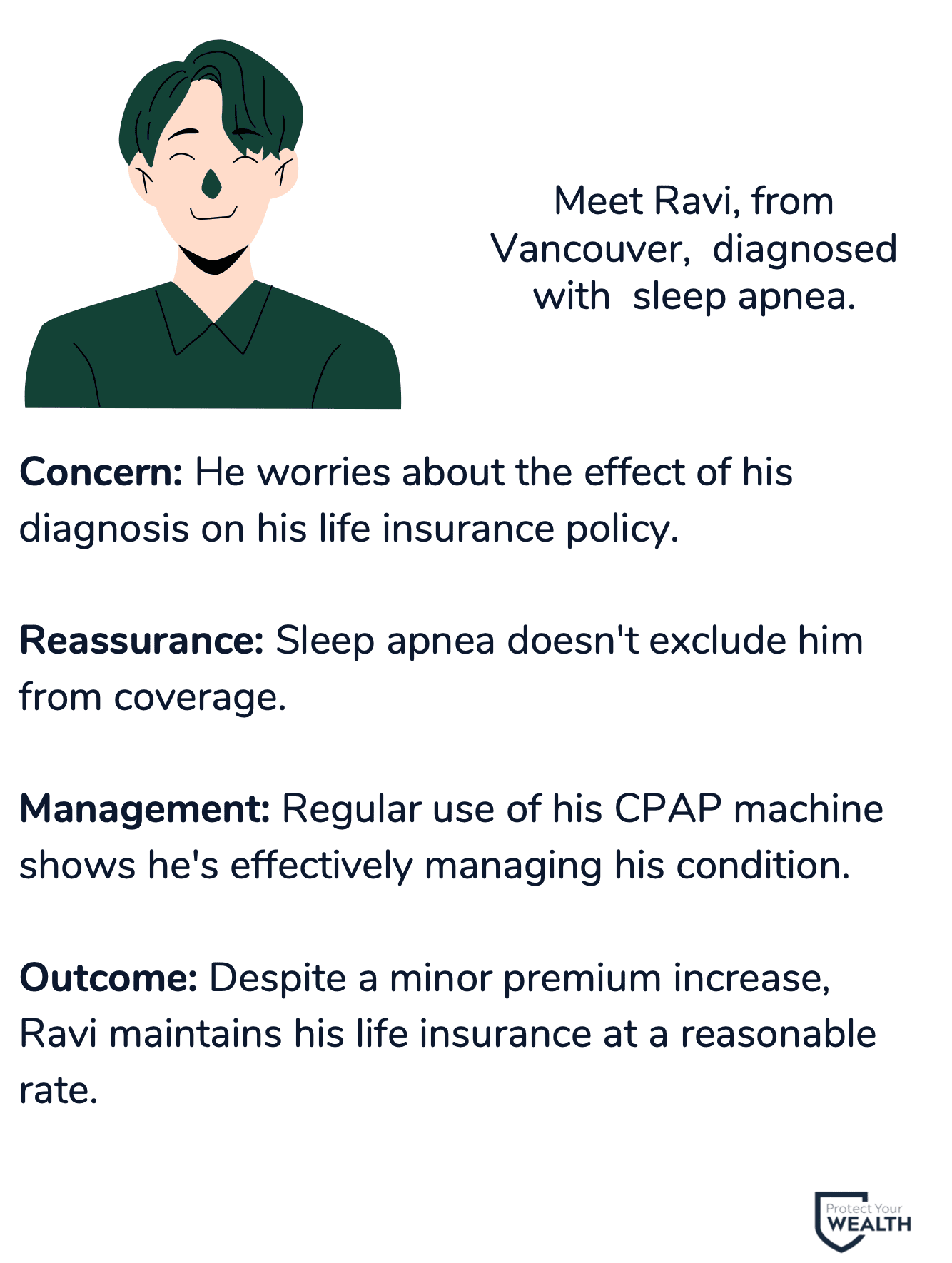
Ravi, a 32-year-old IT consultant based in Vancouver, Canada, was diagnosed with obstructive sleep apnea (OSA) about a year ago. His journey to diagnosis began when he experienced disrupted sleep patterns, excessive daytime drowsiness, and other symptoms associated with this condition. Ravi’s life improved significantly after he started using a Continuous Positive Airway Pressure (CPAP) machine, a common treatment for OSA.
Ravi had always understood the importance of life insurance and had held a policy since his early career days. However, his recent sleep apnea diagnosis sparked concerns about its potential impact on his insurance policy. Would his premiums skyrocket? Could he lose coverage altogether?
His insurance agent provided reassurance, explaining that many life insurance companies understand sleep apnea well and are prepared to extend coverage to individuals managing the condition. Crucially, Ravi’s consistent use of his CPAP machine and regular check-ups showed his commitment to managing his condition, which reduced the insurance risk associated with his sleep apnea.
His premiums did see a minor increase due to his diagnosis. But with his doctor’s confirmation of effective sleep apnea management through his CPAP machine usage, the insurance company offered him a premium that was more affordable than Ravi had anticipated.
Ravi’s story serves to highlight that a sleep apnea diagnosis does not automatically exclude one from life insurance coverage. It underscores the significance of adherence to prescribed treatment and maintaining open lines of communication with healthcare providers. While individual circumstances will vary depending on sleep apnea severity and other health factors, the case of Ravi shows that with research and proactive health management, securing a fitting life insurance policy remains an achievable goal.

How Common is Sleep Apnea?
Sleep apnea is a widespread condition affecting millions worldwide. It’s particularly prevalent in Canada, where its prevalence has been growing steadily. According to recent statistics, about 6% of Canadians report that they’ve been diagnosed with sleep apnea by a healthcare professional.
However, this is likely only the tip of the iceberg. Many individuals are self-reporting symptoms indicative of sleep apnea, although they haven’t been officially diagnosed. Given the significant percentage of the population that may remain undiagnosed, the true prevalence of sleep apnea in Canada could be much higher than the 6% estimate.
The increased self-reporting of sleep apnea symptoms may be reflective of a greater awareness of the condition amongst Canadians. It’s indicative of a trend where individuals are becoming more conscious of their health and are actively seeking answers when they notice a potential health issue. For instance, symptoms like excessive daytime fatigue, loud snoring, or abrupt awakenings with shortness of breath may prompt individuals to research their symptoms, leading to self-reporting of sleep apnea.
Yet, while self-awareness and reporting are important first steps, an official diagnosis by a healthcare professional is crucial for appropriate treatment and management of the condition. As such, there’s a strong emphasis on the need for sleep exams or sleep studies, especially for those exhibiting signs and symptoms of sleep apnea. These tests, often performed in specialized sleep labs, provide a more accurate diagnosis and can guide the proper course of treatment.
In essence, while sleep apnea is a common sleep disorder, many individuals might be living with the condition unknowingly. Raising public awareness about its symptoms, risks, and treatments is crucial for its early detection and effective management. Furthermore, people experiencing possible sleep apnea symptoms are strongly encouraged to seek professional medical advice to get an accurate diagnosis and initiate appropriate treatment.
How Does Sleep Apnea Affects Life Insurance Coverage?
Sleep apnea, while a significant health concern, does not automatically deter life insurance companies from providing coverage. Indeed, due to the prevalence of this condition, many insurers are well-equipped to handle applications from individuals diagnosed with sleep apnea and frequently offer competitive rates.
Importantly, the availability and cost of life insurance for sleep apnea patients often hinge on the condition’s severity and how effectively it’s managed. The classification of sleep apnea’s severity — mild, moderate, or severe — plays a vital role in underwriting decisions.
Insurance companies view well-managed sleep apnea favourably, as it demonstrates the individual’s commitment to maintaining good health. If an applicant can provide evidence that they are effectively managing their sleep apnea, perhaps through regular use of a CPAP machine or other treatments, they are more likely to secure coverage at standard rates.
For those who prefer not to undergo a medical exam, there are no medical exam life insurance policies available. These policies often have higher premiums due to the insurer taking on more risk without having a comprehensive understanding of the applicant’s health. However, they can be an attractive option for those wanting a quick approval process without invasive tests.
Ultimately, sleep apnea doesn’t preclude someone from acquiring life insurance or limit the amount of coverage they can obtain. Like any other medical condition, it’s evaluated as part of the applicant’s overall health profile. The key is proactive management of the condition and open communication with the insurance provider. By doing so, individuals with sleep apnea can secure comprehensive and affordable life insurance coverage.
Evaluation Factors for Life Insurance Applications in Individuals with Sleep Apnea
There are a number of things that life insurance companies look out for during the underwriting stage of rating someone. People are typically rated even if they are in good health and don’t have any medical conditions. For someone who suffers from sleep apnea, there is an additional list of things that the underwriter will need to know to determine your life insurance coverage.
This list includes but is not limited to:
- The type of sleep apnea you have: obstructive sleep apnea, central sleep apnea, or mixed sleep apnea
- Smoking status
- Frequency of Alcohol use
- Medication for your sleep apnea
- Compliance with the medication for your sleep apnea
- Date of diagnosis
- Severity and frequency of your apneas
- History of sleep studies
- Any treatments for your sleep apnea
- Compliance with your treatments
- Duration of apneas
- Motor vehicle accidents caused by drowsiness
- Other possible health issues related to your sleep apnea
Most insurance companies will also require you to fill out a sleep apnea-related questionnaire and will need you to get an attending physician statement. Again, these underwriting questions will decide your rating and alter the price of your coverage. There are always other options available that will guarantee you life insurance coverage without medical examination, find out the difference between Guaranteed Issue vs Simplified vs Fully Underwritten Life Insurance Policies.
Best Life Insurance Policies if You Have Sleep Apnea
There are different severities of sleep apnea therefore there are also different types of life insurance that would be better for you based on the severity of your sleep apnea. People who have sleep apnea have a high chance of getting the same kind of insurance as anyone, both term life policies, and whole life policies are available for those who are diagnosed with sleep apnea. Most insurance companies will offer rates that will vary depending on both the severity of your sleep apnea and if you want a fully underwritten policy or if you want a no medical exam policy. Keep in mind that fully underwritten policies do have a higher coverage amount, and more features available when compared to guaranteed no medical exam policies.
Fully Underwritten Policy
To get a fully underwritten policy this will require you to take a medical exam and get an evaluation from a certified physician. There are benefits to this evaluation because depending on your results, you can get a preferred rate and the cost of your life insurance might be the same as someone without sleep apnea, or just slightly more. This will allow you to have a higher coverage amount and will allow you to have access to different kinds of life insurance policies that have great benefits and features that might better suit your needs and wants.
No Medical Exam/Guaranteed-issue Policy
Sleep apnea can also decide to purchase a no medical exam policy. This can benefit those who do not want to go through a medical evaluation. This would be ideal for those who have an extremely severe case of sleep apnea, but keep in mind that there are many insurance companies that will allow you to get an underwritten policy even if you have severe sleep apnea. A no medical exam can limit the amount of coverage you can receive for your policy. For example, most no medical exam term life insurance policies will only provide you with $500,000 coverage and no medical exam whole life insurance policies will only offer you $50,000 or less in coverage. These policies typically cost more monthly and they have fewer coverage features than the underwritten policies. No medical life insurance is also offered by most Canadian insurance companies.
Simplified Issue Policy
Simplified policies are a form of no medical policy that is available from many different life insurance companies for people who are diagnosed with sleep apnea. These simplified policies have a mixture of traits from fully underwritten policies and guaranteed policies. This is an attractive policy for those who want a higher coverage amount and more features. These kinds of policies will require you to answer limited medical questions, but don’t require you to visit a doctor and get an examination. These policies also can offer up to $1 million in coverage, depending on your health, age, smoking status and a few other factors.
The Cost of Life Insurance With Sleep Apnea
The cost of life insurance can range depending on your choice of a no medical exam policy, simplified policy or fully underwritten policy and also for term life insurance policies or whole life insurance policies. At Protect Your Wealth we firmly believe that you should make an informed decision when shopping for life insurance therefore we offer a free consultation with our professional insurance advisors to find the best insurance company and coverage for your needs and wants. There are a number of different factors that can vary the cost of life insurance for those with sleep apnea but the most important to know about is the rating.
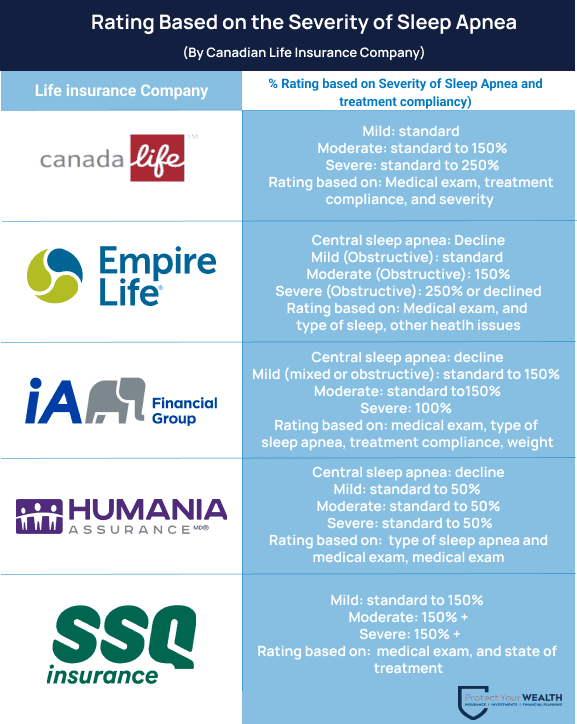
A rating is a percentage that a life insurance company will charge you for your policy. For example, a standard rating for life insurance will be for someone who has no health conditions, if you have severe sleep apnea and you get a 200% rating, this means you will pay 2x more than someone with no health condition.
This rating is based on the questions mentioned above about your condition, and also on your medical exam or if you opt-out of the exam. Life insurance companies specifically base this percentage rating on the severity of your sleep condition. Here is a list of some life insurance companies in Canada and what they will rate you based on the severity of your sleep apnea and if you are treatment compliant (fully underwritten policies):
What Happens if You Get Diagnosed With Sleep Apnea While Having Life Insurance
If you already have a life insurance policy and you become newly diagnosed with sleep apnea, you don’t need to worry about your life insurance coverage. Canadian life insurance companies cannot revoke or change your life insurance coverage or policy once it is effective. This gives you peace of mind in the case of this diagnosis or other health conditions.
Frequently Asked Questions (FAQs) About Life Insurance With Sleep Apnea
Yes, having sleep apnea might affect how much you pay for life insurance. Any pre-existing condition while applying for life insurance could increase the cost of your monthly premiums. Life insurance companies take on more risk to cover your life because sleep apnea can reduce your lifespan.
However, even if you have sleep apnea, you might be able to acquire standard or preferred rates. You may be eligible for affordable life insurance rates if you actively participate in your sleep apnea treatment plan, you don’t experience any other negative effects, and your condition remains stable.
Yes, you can get life insurance if you have sleep apnea. Since life insurance companies protect your life, they evaluate any risk factors. During the application process, they thoroughly analyse your health and medical history. If a health problem raises the likelihood of premature death, it increases the insurer’s risk.
Life insurance companies evaluate each application individually. Therefore, if you have been diagnosed with sleep apnea, the company will analyse all relevant criteria, such as the severity of your disease and the available treatment alternatives. Additionally, your age, height, weight, occupation, and interests will be considered. In many instances, people with sleep apnea can still obtain life insurance.
If you have been diagnosed with sleep apnea but have not followed your treatment plan advised by your doctor, your life insurance premiums could increase by up to 50 percent.
Sleep apnea increases your insurance risk because, if left untreated, the sleep and breathing disturbances can lead to daytime drowsiness and, consequently, injuries or accidents and other potentially dangerous disorders, such as high blood pressure and heart disease.
The type of sleep apnea you have may not have an effect on your rates, but the underlying reason may. If your sleep apnea is caused by heart illness, for instance, your heart condition will also affect your rates. The underwriting procedure is used by life insurance companies to determine the risk of insuring you. Alternatively, if your sleep apnea is well-controlled, your illness may have little to no impact on your life insurance premiums, depending on your overall health.
As a preexisting condition, sleep apnea affects your ability to get life insurance. There are various things you can do right now.
Concentrate on Handling Your Condition: There are a variety of treatment options available for many individuals with this illness. Continuous positive airway pressure (CPAP) may be one therapy option for eliminating or minimizing sleep apnea-related problems. Oral appliances may also be a therapy option. If you can demonstrate to your insurance company that you are actively treating your illness, your chances of obtaining life insurance with sleep apnea will increase.
Wait and Apply Again: If your doctor believes that your sleep apnea can be improved with treatment, your best option may be to wait six months before reapplying for life insurance. This does imply that you will be without life insurance coverage for a little longer, which could put your family at risk. However, if treatment will remove or substantially minimize your health difficulties, this may be a preferable approach to obtain better coverage options or reduced premiums.
Consider a No Medical Exam Policy: If you’ve been denied coverage due to sleep apnea or other medical conditions, no-exam life insurance is typically the best option.
Not necessarily. There are no medical exam life insurance policies available. However, these often come with higher premiums due to the insurer having less information about your overall health. Fully underwritten policies, which typically include a medical exam, generally provide more comprehensive coverage at potentially better rates.
Finding the right life insurance for you
If you’re diagnosed with a health condition you can still find affordable life insurance for your situation! Working with a life insurance advisor can help you create the perfect life insurance plan and package for your needs.
At Protect Your Wealth, we work with and compare policies and quotes from the best life insurance companies in Canada to create the best solution for you and your needs. We’ve also been providing expert financial planning solutions since 2007, including retirement planning such as opening LIRA, and RRSP or investing with TFSA.
Contact Protect Your Wealth or call us at 1-877-654-6119 to talk to an advisor today! We’re proudly based out of Hamilton, and service clients anywhere in Ontario, Alberta, and British Columbia, including areas such as Kingston, Nanaimo, and Lethbridge.


Leave A Comment