

Life Insurance with Hepatitis
Talk to one of our experienced advisors, today!
10 minute read
Originally published: July 28, 2022
Updated: November 3, 2022

Life Insurance with Hepatitis
Talk to one of our experienced advisors today!
10 Minute read
Originally published: July 28, 2022
Updated: November 3, 2022
Being diagnosed with a health condition may drastically affect your quality of life. While having hepatitis (specifically B and C) may increase your life insurance premiums, it is still possible to find a policy at a reasonable rate. If you know what to look for in a life insurance company and how to best present your application, getting life insurance with hepatitis can be simpler than you may think. This blog on life insurance with hepatitis will explain how having hepatitis can affect your life insurance, what factors are considered when it comes to hepatitis, and more!
When clients reach out to us about life insurance with hepatitis, they have many concerns. Since there are various kinds of hepatitis and each one varies in severity when it comes to liver damage, each case is treated differently. All these concerns are valid and we understand the anxiety of not being able to protect yourself and your loved ones. One recurring question is “Can I get life insurance if I have hepatitis?”
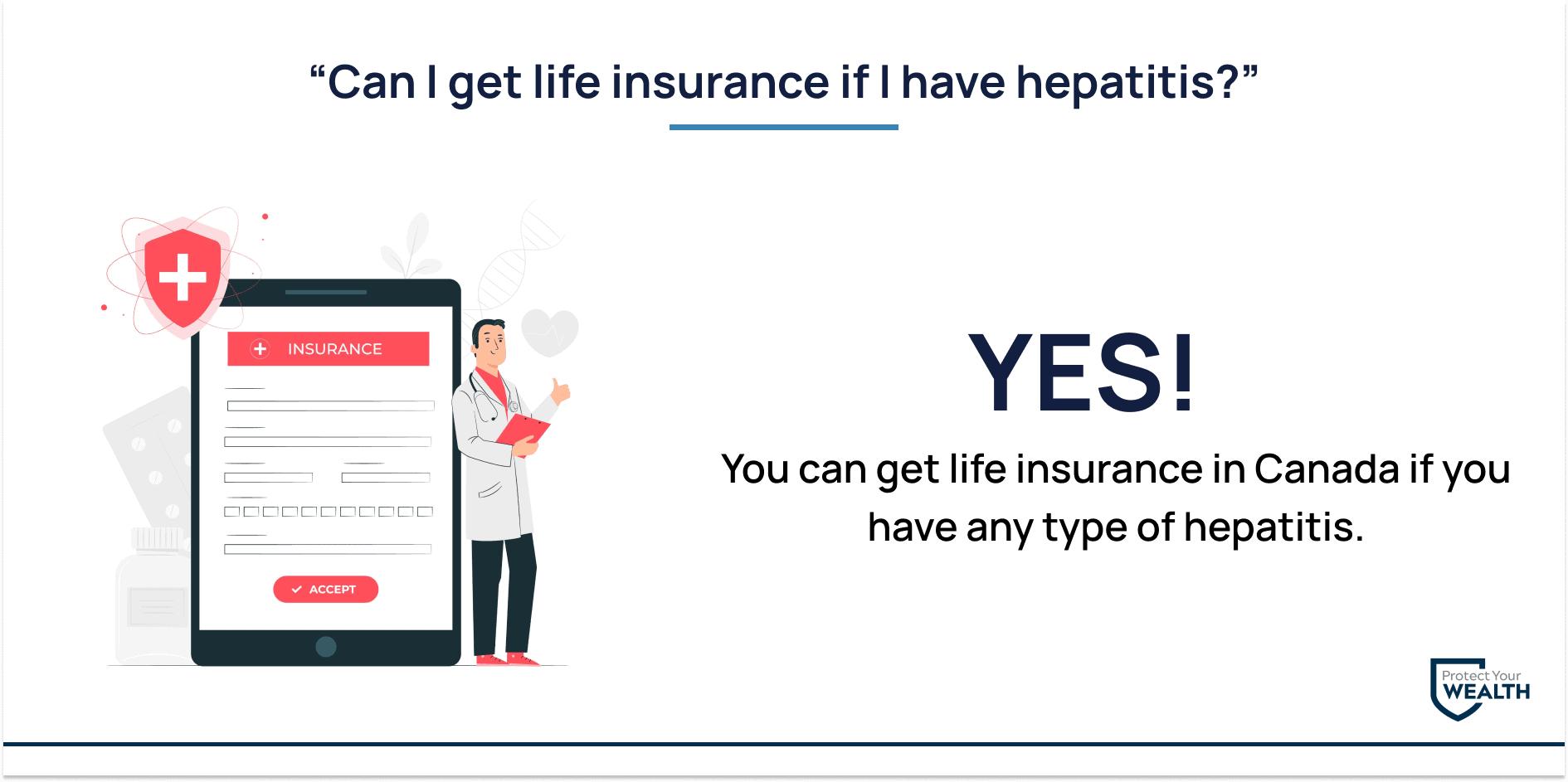
The answer is yes! Regardless of the type of hepatitis that you have or the severity of your condition, you can get life insurance.
In this article:
What is Hepatitis?
Hepatitis is defined as the inflammation of the liver. A number of viruses (viral hepatitis), substances, medications, alcohol, certain genetic abnormalities, an overactive immune system that mistakenly targets the liver (autoimmune hepatitis), and other factors can result in liver inflammation. Hepatitis can be chronic, which is a long-term condition that typically causes more subtle symptoms and increasing liver damage, or acute, which flares up quickly and then goes away.

Types of Hepatitis
There are five viruses that cause the various types of viral hepatitis: hepatitis A, B, C, D, and E.
- Hepatitis A is the most common type of hepatitis, and it is a food-borne illness that can be spread through tainted water and unwashed produce. It is the most contagious, especially in children, but also has the lowest risk of harming the liver. It is often moderate and goes away entirely in six months.
- Hepatitis B can be passed from mother to child as well as by contact with contaminated blood, needles, syringes, or body fluids. It is a chronic condition that, after many years of virus-carrying, can occasionally result in long-term liver damage, liver cancer, and cirrhosis of the liver.
- Hepatitis C can only be spread by infected blood or mother-to-newborn contact during childbirth. Long-term, it can also result in cirrhosis and liver cancer.
- Hepatitis D: Only those with hepatitis B and/or D infections can develop hepatitis D.
- Hepatitis E: Most cases of hepatitis E occur in South America, Asia, and Africa. When used in excess or at extremely high dosages, some drugs that are often considered safe can be harmful to the liver and result in hepatitis (drug-induced hepatitis). Acetaminophen (Tylenol) and even vitamin A are examples of them.
What are the Symptoms of Hepatitis?
Some common symptoms of hepatitis are as follows:
- Malaise
- Fatigue
- Discomfort in the lower right corner of the abdomen
- Either nausea or vomiting
- Urine with a deep colour
- Stools with a light colour
- Jaundice (yellowing of the skin and the white portion of the eyes)
- Stomach bloating brought on by fluid retention
How is Hepatitis Diagnosed?
In order to diagnosed hepatitis, a medical professional will do the following:
- A physical examination that may or may not show an enlarged, swollen liver.
- Liver ultrasound to look for any changes.
- Blood tests to look for the presence of any of the five hepatitis viruses.
- Blood tests to check for high liver enzymes that occur when the liver is harmed or infected.
- When other tests are unclear, a liver biopsy is performed to confirm any suspected inflammation and to establish the exact extent of liver damage.
What Treatment Options are Available?
Children and those who have never had hepatitis A or hepatitis B should take a vaccination in order to avoid infection. Hepatitis types C, D, and E cannot be prevented by vaccination. Once hepatitis occurs, there is no treatment for it.
The main goals of treatment are symptom reduction, liver damage prevention, and, if possible, liver damage reversal. The majority of acute hepatitis cases will go away with time. Some drugs may be used to control the overactive immune system and stop additional attacks on the liver in autoimmune hepatitis.
Life Insurance with Hepatitis
An applicant’s qualifications for life insurance usually depend on the following conditions:
- Possessing a minor form of hepatitis
- Recovering spontaneously
- Antiviral treatment that results in healing from the disease
Additionally, life insurance companies want to make sure that hepatitis patients are receiving care and adhering to their physician’s recommendations. You can increase your chances of getting life insurance with hepatitis if you are changing your lifestyle for the better, such as giving up drinking and smoking.
What Factors Play a Role in Decision Making?
Although it depends on the insurance company and the type of policy that you are applying for, some common factors that the majority of insurance companies focus on are:
- The applicant’s age
- Treatments
- Using alcohol/smoking
- The duration of hepatitis
- Acute or chronic hepatitis
- If remission occurs and the virus has been eradicated from your system
- Current blood test results, including a liver function test and a hepatitis panel
Note: Depending on the type of hepatitis, insurance companies may ask different things.
Hepatitis B and Life Insurance
Insurance companies will consider the following when it comes to a fully underwritten policy with hepatitis B:
- After complete recovery from acute hepatitis B, coverage can be considered.
- Chronic hepatitis B is evaluated on an individual basis and may be rejected based on current liver function tests and hepatitis panel findings.
- Applicants with Hepatitis B and C, cirrhosis, alcohol issues, severely elevated liver function tests, or an abnormal liver biopsy are usually turned down.
Hepatitis C and Life Insurance
Insurance companies will consider the following when it comes to a fully underwritten policy with hepatitis C:
- Depending on the patient’s age, duration of the disease, and liver test results, some Hepatitis C candidates may be accepted for life insurance coverage. Applicants may be refused in some instances.
- Applicants who have been successfully treated and have undetectable HCV-RNA levels can be eligible for coverage three months after their treatment stops.
- Applicants with Hepatitis B and C, cirrhosis, alcohol issues, severely elevated liver function tests, or an abnormal liver biopsy are usually turned down.
Expected Life Insurance Rates for Hepatitis
The charges you are offered will differ depending on the type of virus you have and the degree of your sickness. Those who have totally recovered from the disease or have demonstrated normal liver function and viral load for two or more years can expect a lower rating.
Keep in mind that your hepatitis status is not the only factor that insurance providers check. The decision is influenced by your family history, overall health, and even your driving record. Your prices will also be affected by the coverage amount of term life insurance you purchase.
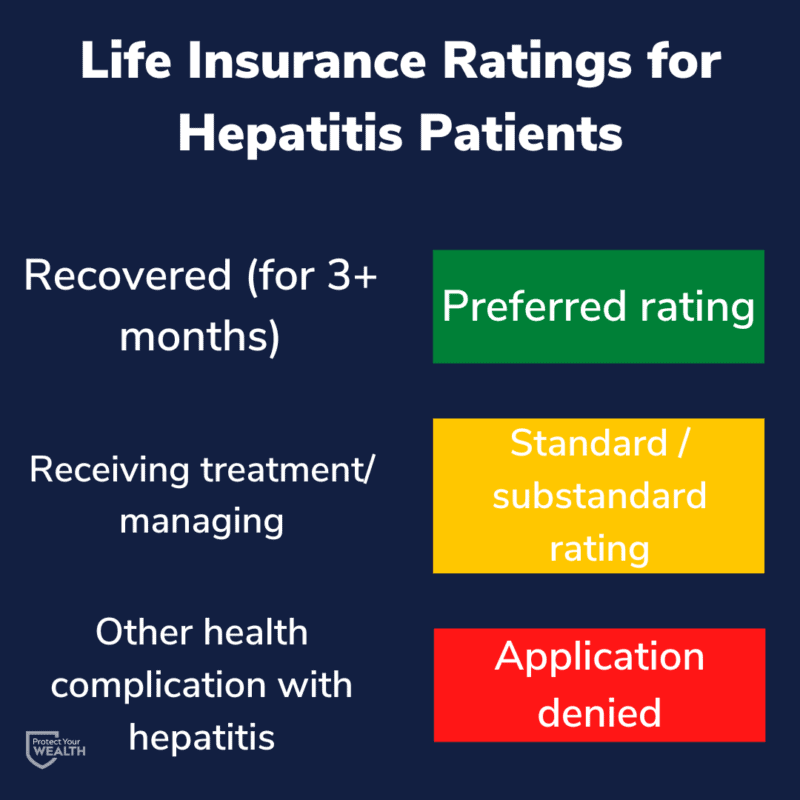
Rating classes are used by insurance firms to determine your rates. Understanding life insurance rating classes will give you a better idea of what to expect. The greatest (lowest cost) rates are in Preferred and Preferred Plus. This is for people who have recovered after treatment. Standard and Standard Plus are usually in the middle of the spectrum and are used for people who have either totally recovered or are managing their disease and have normal test results.
This being said, individuals with chronic hepatitis and test results indicating current concerns may possibly earn a standard rating. Alternatively, the insurance provider may reject your application. Cirrhosis and liver disease are two of the most common causes of declined applications.
What If I’m Declined for my Hepatitis?
Even if you are declined traditional life insurance because of your hepatitis, you still have options! A guaranteed issue policy is a great option for individuals that are unable to obtain traditional policies.

Guaranteed Life Insurance Policy
There are no questions asked and no medical exams required with these plans. For those with more serious health concerns or who are above the age of 65 and do not qualify for regular or simplified insurance, there is guaranteed issue insurance. For guaranteed life insurance, the waiting time is typically between 12 and 24 months. As the most expensive option, guaranteed issue insurance, which is also known as permanent life insurance, typically has a $50,000 maximum coverage limit, though some insurers provide lower limits.
Frequently Asked Questions (FAQs) about Life Insurance with Hepatitis
Hepatitis is a liver inflammation produced by a virus that spreads through bodily fluids or by non-infectious causes. Hepatitis can be caused by autoimmune illnesses, alcohol consumption, and even certain drugs. Some cases are intense and resolve within a few weeks. On the other hand, chronic infections might last for six months or longer.
Yes! You can apply to life insurance with hepatitis. Please keep in mind that depending on certain factors such as: the type of hepatitis, the treatment, or even your test results, you may be denied coverage for a traditional fully underwritten policy. However, you will still have options such as guaranteed issue life insurance.
Speak to us today to discuss your options!
A damaged or sick liver increases your risk to the insurance company. Life insurance for high-risk people will always be more difficult to obtain. However, even if you have a chronic condition, you can still get term life insurance. Individuals are considered insurable if they have totally healed, have effectively treated an illness with antiviral treatment, or have a minor infection.
Term life insurance applicants should expect to undergo a medical exam. Your liver function and viral load will be tested as part of the checkup. Your doctor will do tests to determine which virus or viruses you have. Companies may even consider how long you’ve had the diagnosis, your age, and any other conditions you have. Your medication and whether you have an acute or chronic condition are also taken into account.
Keep in mind that changing your lifestyle has an effect on both your general health and your chances of qualifying for insurance. Stopping smoking and drinking are two essential adjustments.
When it comes time to apply for term life insurance, you should be informed of your present health situation. Companies take into consideration any steps you take to manage your disease responsibly.
The average cost and criteria varies greatly depending on the company. You may be able to save money and time by having an agent prepare some preliminary rates for you to review.
You can speak with an insurance agent who will assist you to shop around for the best pricing. An expert can also assist someone with pre-existing conditions in obtaining the coverage they require and avoiding a denied application.
The answer is yes! Regardless of the type of hepatitis that you have or the severity of your condition, you can get life insurance. There are life insurance policies out there that will cover you no matter how severe your hepatitis might be. Contact us to find out more about your life insurance options!
Finding the right life insurance policy for you
Even if you have hepatitis, there’s a life insurance product or package for your situation. A life insurance specialist can help you create the best plan and package for your needs.
At Protect Your Wealth, we work with and compare policies and quotes from the best life insurance companies in Canada to ensure the best solution for you and your needs. We provide expert life insurance solutions, including no medical life insurance, critical illness insurance, term life insurance, and permanent life insurance to build the best package to give you the protection you need.
Contact Protect Your Wealth or call us at 1-877-654-6119 to talk to an advisor today! We’re proudly based out of Hamilton, and service clients anywhere in Ontario, Alberta, and British Columbia, including areas such as Guelph, Toronto, Kamloops, and Medicine Hat.


Leave A Comment