 ·

Cottage Capital Gains at Death: Who Pays and How to Keep It in the Family
For couples who leave the cottage to each other, the tax usually waits for the second death, and a joint last-to-die policy is built to pay out on that same death.
Written by Parvesh Benning, Licensed Life Insurance Broker
Vacation properties and cottages are where people really worry, because there’s capital gains on that. Once both spouses have passed away, the cottage is treated as sold at its value on that date, and the tax is settled on the final return, usually before the estate hands over the keys. If it goes straight to the kids, or there’s no spouse to leave it to, that happens at the first death instead.
Updated: October 14, 2026

Cottage Capital Gains at Death: Who Pays and How to Keep It in the Family
For couples who leave the cottage to each other, the tax usually waits for the second death, and a joint last-to-die policy is built to pay out on that same death.
Written by Parvesh Benning, Licensed Life Insurance Broker
Vacation properties and cottages are where people really worry, because there’s capital gains on that. Once both spouses have passed away, the cottage is treated as sold at its value on that date, and the tax is settled on the final return, usually before the estate hands over the keys. If it goes straight to the kids, or there’s no spouse to leave it to, that happens at the first death instead.
Updated: October 14, 2026
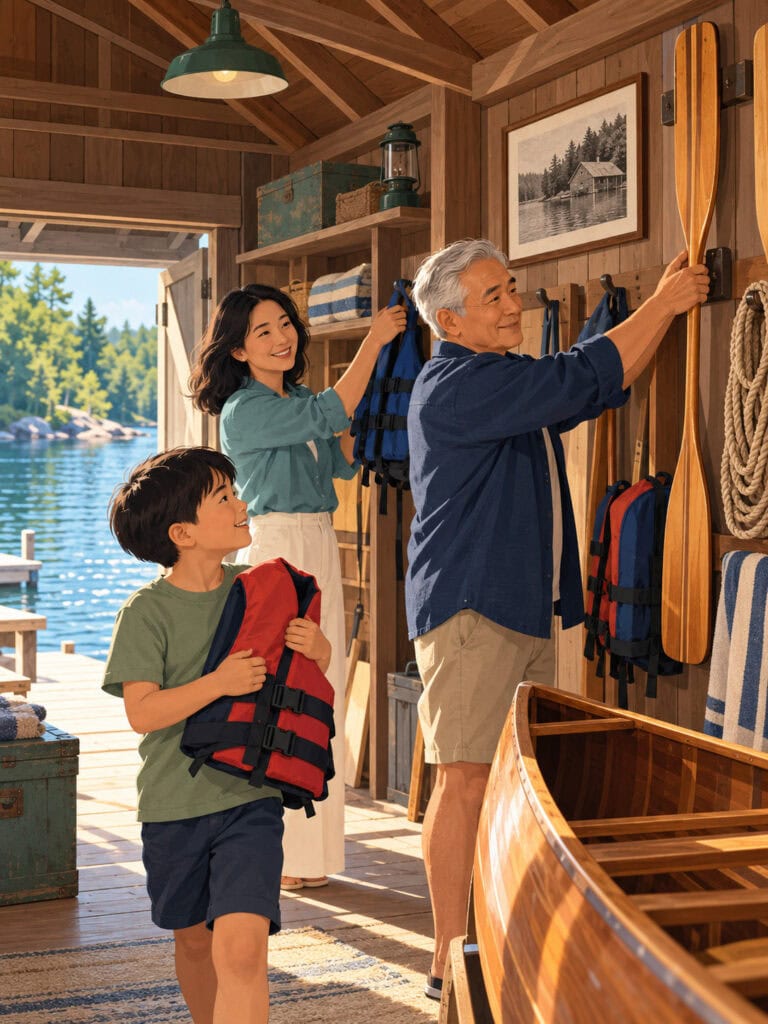
If it doesn’t go to the kids, it’s going to the government. Not the cottage itself, but a big share of what it’s worth. So the first question I ask cottage owners isn’t about probate at all. What is the tax you owe? Below is how that number gets worked out, what genuinely shrinks it, and where joint last-to-die insurance fits when the answer is still six figures.
Illustration: one cottage, second death
$237,500 to $270,000 in tax
Bought for $500,000, worth $1.5 million when the second spouse dies. Half of the $1,000,000 gain is taxable at the top combined rate, which runs from 47.5% to 54% across the seven provinces we’re licensed in.
Value at death
$1,500,000
Less original cost
$500,000
Capital gain
$1,000,000
Taxable half
$500,000
Tax at 47.5% to 54%
$237,500 to $270,000
Illustrative only, not tax advice. It applies the top rate to the whole taxable half, which may overstate the bill meaningfully when other income that year is low. A principal residence designation would also change it.
Skip to the part you need
Who Pays Capital Gains on a Cottage When the Owner Dies
On a family cottage, when both spouses pass away, there’s a deemed disposition, and the tax is paid by the estate of the last spouse to die through that spouse’s final tax return. The CRA treats the cottage as sold at fair market value immediately before death. The children who inherit don’t report that gain on their own returns.
When the cottage tax actually lands
Step 1: first spouse dies
Tax due now?
No
The cottage rolls to the surviving spouse at its original cost.
Step 2: second spouse dies
Tax due now?
Yes
Treated as sold at its value that day. The whole gain since purchase goes on this final return.
Step 3: children inherit
Tax due now?
No
Their cost base starts at the value on the date of death.
Those assets roll over to the spouse tax-free, so nothing is owed at the first death. But eventually, when it comes out to the kids, the bill shows up. And it’s measured on the growth all the way back to the original purchase, not just the years since the first death.
One wrinkle. The executor can elect out of the spousal rollover on the first spouse’s final return, which occasionally makes sense when that return has low income or losses to soak up part of the gain. That’s a call for the estate’s accountant, with real numbers in front of them.
Whoever it lands on, the executor named in your will files that final return and pays the tax out of the estate, generally before the cottage is transferred. If the cottage is most of what’s in the estate, the cash has to come from somewhere. Usually that’s where the forced sale conversation starts.
I sat down with a business-owning couple in their early sixties whose whole plan was built around the company. When we got to the vacation property, they told me they’d never even thought about it. That’s common. And that vacation property can trigger capital gains of hundreds of thousands.
How to Calculate Capital Gains Tax on a Cottage, and Why Probate Is the Smaller Bill
What is the tax you owe? Think of it from that perspective: take the cottage’s value at death, subtract its adjusted cost base (what it cost plus capital improvements), and half of that gain is added to income on the final tax return at that year’s marginal rate.
Adds to your cost base
- The purchase price
- Costs to buy it, such as legal fees and commissions
- Additions and improvements, such as a bigger deck or a new bathroom
Doesn’t count
- Maintenance and repairs
- Running costs: hydro, insurance, property tax
Keep the receipts. The executor can only add improvements that can be documented, and every dollar added to the cost base is a dollar less of gain. Once you have the gain, half of it is taxable. A proposed increase to two-thirds was cancelled and never took effect.
That taxable half is added to everything else on the final return, so how much of it lands in the top bracket depends on the rest of that year’s income. At the second death, that often includes whatever is left in an RRSP or RRIF, which is generally taxed on the same return when there’s no spouse to roll it to.
Taxable share of the gain
50%
Top combined rate, by province
47.5% to 54%
Tax as a share of the gain
About 24% to 27%
Federal plus provincial top rates in the seven provinces we’re licensed in.
Same $1.5 million cottage, two bills
Income tax on the gain: $237,500 to $270,000
Probate, using Ontario’s fee as the example: $21,750
Income tax from the illustration at the top of this page; the lighter end of the bar is the spread between provinces. Ontario charges $15 per $1,000 of estate value above $50,000, assuming the cottage passes through the estate. The income tax bill is more than ten times larger.
In Ontario, on a million dollars you’re paying about $14,250 in probate, and the amount varies by province. That’s real money, but it’s not what forces the sale. And life insurance paid to a named beneficiary stays out of the estate, so it isn’t counted for probate at all.
Can You Avoid Capital Gains on a Cottage? What Works and What Doesn’t
Mostly, no. You can’t just sell it, put it in a trust and have it trigger nothing. That doesn’t exist, because there’s still a deemed disposition. What you can do is shrink the gain with a principal residence designation, spread it over a few years with a sale to the kids, or line up the cash to pay it.
Trusts have their place. When you’re in the multi tens of millions, a trust can make sense for privacy and control. For most cottage families, though, I see so many scenarios where things are overly complex, and the cottage still gets taxed: the trusts built for people 65 and older are taxed at death, and most others every 21 years.
The principal residence designation is the one move that genuinely cuts the bill, and it isn’t free. Every year you give the cottage is a year the house can’t use.
How much of the gain the designation shelters
(1 + years designated) ÷ years owned
Simplified illustration. Owned 20 years, cottage designated for 9: (1 + 9) ÷ 20 = 50% of the cottage’s gain sheltered.
- One property per family per year, since 1982
- The cottage must be lived in at some point that year
- Reported on Form T2091(IND) when sold, or by the executor on Form T1255 at death
- Years before 1982 follow different rules
Usually the property with the bigger gain per year of ownership gets the years, and an accountant should run that comparison before anything is filed. But even after every move above, most families are still left with a bill. So the real question becomes where the cash comes from when it’s due.
To mitigate the capital gains tax that his family would face, Robert has three potential options:
- Robert could purchase life insurance with around $150,000 in coverage (or more depending on his other financial needs). By purchasing a life insurance plan with enough coverage to cover the tax liability of the family cottage, the death benefit payout to his beneficiaries would allow the property to be passed on without the capital gains tax becoming a burden on his heirs.
- Robert could also consider gifting his estate to his heirs at a more advantageous time while he is still alive. This can prevent the capital gains tax from rising in the upcoming years of Robert’s life and ensure that his heirs will never inherit the cottage when they are not financially able to do so.
- If Robert had designated the cottage as his principal residence, he may be able to apply for the principal residence exemption. By leveraging this exemption he could eliminate or reduce the capital gains tax, depending on how many years the cottage was designated as the principal residence.
Robert considers his options and decides to purchase a life insurance policy with $200,000 in coverage. This policy will mitigate the capital gains taxes of the family cottage while also allowing Robert to keep ownership of the cottage for the remainder of his life. The extra $50,000 in coverage can offer his family some extra money to help with other end-of-life expenses but also ensure that if the capital gains taxes were ever to rise due to increase in property value or any future capital improvements there will still be enough to cover the capital gains tax.
Joint Last-to-Die vs Two Individual Policies, and What a Health Rating Does to Each
The goal here is to put in place the last to die, because that’s what will satisfy the tax obligation. A joint last-to-die policy pays once, at the second death, the same death that triggers the cottage tax. Because one payout covers two lives, it usually costs far less than two separate policies, and a health rating on one spouse often moves the price surprisingly little.
Same $500,000, two ways to insure a couple (monthly premium)
10-year term, couple aged 62 and 66
$529
$122
$199
Two separate policies
Joint, both standard
Joint, one spouse rated 250%
Term to 100, coverage for life
$3,207
About $1,083
Two separate policies, man and woman at 70
Joint, couple both 72
Two separate policies pay $500,000 twice, $1 million in total. You’d need both to be sure the money is there at the second death, because nobody knows who goes first. The joint policy pays $500,000 once, which is what the tax needs.
Non-smokers. Left: real quotes from one case, joint policy with Empire Life. Right: two separate cases, not a matched quote. The joint figure is a real case at about $13,000 a year for a couple both 72; the separate figures are starting-from rates at 70 for $500,000 each, based on current carrier rates, so the joint couple is two years older. Illustrations, not quotes.
Even with a risk rating, it’s relatively muted, that impact, because there are two insured. The insurer melds the two ages and health histories into one joint risk, so one spouse’s condition is diluted instead of carried alone. On another couple’s participating whole life policy, a rating on one spouse moved the base premium from $19,700 to $20,140 a year.
That’s why a joint policy can make it easier to get coverage in place when one of you has a health concern. Not guaranteed, and the carrier still underwrites both lives, but the math works in your favour more often than people expect.
Joint last-to-die
Two separate policies
Joint first-to-die
Pays out at
Second death
Each death
First death
Number of payouts
One
Two
One
Lands when the cottage tax is due
Yes
Only the second payout
No, it’s gone first
One practical catch. A lot of the quote tools don’t seem to love the joint quotes, so it just requires an extra layer: most online calculators won’t price one, and at $500,000 across two lives, expect medical requirements.
If you want the joint and separate numbers run on your own ages and health, across several carriers at once, that’s exactly what a broker is for. Start with our permanent life insurance quotes page and we’ll take it from there.
Term 100, Whole Life or Universal Life: Matching the Policy to a Cottage Tax Bill
Usually two things have to be true before a permanent policy makes sense: you’re in a higher tax bracket, and you want the idea of having coverage forever. With a cottage, the second one decides it. Nobody knows the year of the second death, so the policy has to last for life, and Term to 100, universal life or whole life all do that. A 10- or 20-year term only covers a window.
At 65, $500,000: lower premium, coverage only
Higher premium, more cash value
10-year term
M $344 · F $243
Ends with the term. Fits a known window, like equalizing while a sale is planned.
Term to 100
M $1,282 · F $1,134
Lifetime, no cash value. Pays the tax and nothing else.
Universal life
M $1,282 · F $1,136
Lifetime if funded. Room to deposit more and invest inside.
Starting-from monthly premiums for one person, age 65, non-smoker, $500,000, based on current carrier rates. Your price depends on your full underwriting profile. Universal life shown at minimum funding. Joint last-to-die pricing is quoted separately.
A lifelong policy is astronomically higher than term, so sometimes one will do a partial amount as a lifelong policy and the rest as a term policy. The permanent piece is sized to the tax. The term piece covers anything that only matters for a set number of years.
Could you just invest the premiums instead, in a portfolio or GICs? It’s not apples to apples. Take that differential, invest it, and ask where you land after tax on the day the cottage tax is due, because the biggest difference is not just the rate of return, it’s the after-tax result to the estate. And on a participating policy, the dividend scale represents the dividend. It doesn’t mean that’s the rate of return.
Premiums can stop at the first death
Offered on these joint products
- Canada Life Wealth, Balanced and Estate Achiever (participating whole life)
- Sun Life Sun Permanent Life (Life Pay) and SunUniversalLife II
- iA whole life and Term to 100, “paid-up on first death”
- Desjardins Life Term to 100
Joint last-to-die versions, per each carrier’s current advisor material. Choosing premiums to the first death changes the price, so quote it both ways. Confirm at application.
Most families don’t know that option exists until it’s on a comparison in front of them. That’s one more reason to look at several carriers side by side instead of one company’s product sheet.
Covering Cottage Tax When Parents Are Over 70 or Hard to Insure
Often it can still be done, but after 70 the order you try things in matters. Years down the road for estate taxes, you want to convert an existing term policy to a permanent one without any sort of medical, so the company where that policy sits matters. If there’s nothing to convert, several carriers still issue joint last-to-die coverage into the mid-80s with full underwriting.
1
Convert term you already have
No medical. The deadline is often around 70 or 71, depending on the policy, and it’s priced at your age when you convert.
2
Fully underwritten joint last-to-die
Issue ages run to 85 on Canada Life’s Achiever line and Sun Life’s Sun Permanent Life. A health issue on one spouse often moves a joint price less, though it varies by carrier and case.
3
Simplified issue
Fewer health questions, but still underwritten, and your answers are binding. Assumption Life Platinum Protection whole life offers joint last-to-die up to $500,000 at 51 to 75 and $250,000 at 76 to 80.
4
Guaranteed issue, last resort
No health questions. Caps run from $25,000 to $100,000 depending on carrier and age, and a natural-cause death in the first two years returns premiums instead of the benefit.
Don’t sit on a conversion. The conversion price goes up every year you wait, because it’s based on your age on the day you convert. And when a birthday is close, we would backdate the policy to save age; some carriers allow six months or more.
Guaranteed issue usually tops out at $50,000 or less by the mid-seventies. Put that next to the tax bill from earlier on this page.
Share of a $237,500 to $270,000 cottage tax bill that guaranteed issue can cover
Manulife Guaranteed Issue Life, age 70 or under: $100,000, about 37% to 42%
Same plan, age 71 to 75: $50,000, about 19% to 21%
Two-year exclusion: a death from natural causes in the first two years returns the premiums, not the coverage amount. Tax figure from the illustration at the top of this page; the lighter end of each bar is the spread between provinces.
If you’re past 70, or one of you has been declined before, the order above matters more than the carrier. Our guide to life insurance after 70 goes deeper, and the no-medical quotes page shows what the simplified and guaranteed routes look like before you commit to anything.
Dividing a Cottage Among Several Children: Equalizing With Insurance
What is the eventual plan with the cottage? That’s the first question, because when one child wants it and another doesn’t, a common answer is to leave the cottage to the one who wants it and use life insurance to give the others cash of similar value. The same policy can cover the tax, so nobody has to sell to pay it.
No plan
Cottage to one child, insurance to the other
The executor
Owes the tax with no cash to pay it
Has the cash, if the policy pays the estate
The child who wants it
Buys a sibling out, or it’s sold
Keeps the cottage
The child who doesn’t
Waits on a sale to get a share
Gets cash of similar value
One couple told me their son would take over their half, but they didn’t think their daughter could afford to, and the kids would also have to buy out the aunt and uncle who co-own it. They’d sooner move into a condo than give the place up. There’s a lot of planning in that, and most of it isn’t insurance.
The same equalization logic shows up with family businesses: one child gets the company, and a joint last-to-die policy pays the other. Swap the company for the cottage and it works the same way, as long as the coverage is still in force at the second death. A 10-year term only fits if the transfer happens inside the term.
If siblings will own it together, have a lawyer draw up a co-ownership agreement: who can sell, how a buyout is priced, who pays for the roof. Insurance can fund those exits, but it can’t write the rules. And who you name as beneficiary matters: a policy payable to the estate gives the executor cash for the tax but goes through probate, while a named child receives it directly and the executor can’t touch it. Your lawyer should set that up with the will, not after it.
Cottage Tax Questions Families Ask
These come up on almost every cottage call. Short answers, each one able to stand on its own, sorted by whether the question is really about tax, insurance or family.
Tax
Is there an estate tax or inheritance tax in Canada?
No, not as a separate tax. Canada uses a deemed disposition instead: at death, assets like a cottage are treated as sold, and the capital gain is taxed on the final return. Provinces can also charge a probate fee on the estate, and it varies by province; Ontario’s, for example, is $15 for every $1,000 above the first $50,000.
Tax
Do I pay capital gains tax when I inherit my parents’ cottage?
Generally no. The gain up to the date of death is taxed on the deceased’s final return and paid by the estate. You inherit with a cost base equal to the cottage’s value at death, so you’d only owe tax on growth after that, when you sell it or at your own death.
Tax
Is it better to gift the cottage to my kids now or leave it in my will?
Neither avoids the tax. A gift is treated as a sale at today’s fair market value, so the gain is taxed now on your return, while leaving it in your will taxes it at death. Selling it to them for $1 is worse: you’re still taxed at full value, and their cost base is only $1.
Tax
Can I designate my cottage as my principal residence?
Yes, if you or your family lived in it at some point in each year you designate. Since 1982 a family can designate only one property per year, so years given to the cottage are taken from the house. It’s reported on Form T2091(IND) when sold, or by the executor on Form T1255 at death.
Insurance
Is a life insurance payout taxable in Canada?
A death benefit paid to a named beneficiary is generally received tax-free, and it isn’t counted in the estate for probate. That’s why it suits a cottage tax bill: once the claim is paid, there’s cash to cover the tax instead of selling the place to raise it. More detail in our guide to when life insurance is taxable.
Insurance
How much life insurance do I need to cover capital gains on a cottage?
Start with the gain: value today minus your cost base, then half of that, taxed at your top marginal rate. At the top rate that works out to roughly 24% to 27% of the gain, depending on your province, so a $1 million gain means about $237,500 to $270,000 in tax. That’s a simplified top-rate illustration; with little other income that year, the actual bill is lower. Then allow for the cottage to keep growing until the second death; insurers will consider coverage sized to a projected tax, within their financial underwriting limits.
Insurance
Is life insurance better than investing the money to pay the tax?
It depends on your ages, health and how long the money has to work. Compare what each option would leave the estate after tax at the second death, not the rate of return. A policy pays its full amount whether that day comes in five years or thirty; an investment account only holds what it has grown to.
Insurance
Does joint last-to-die Term 100 exist in Canada?
Yes. iA, Desjardins and BMO all list joint last-to-die on their Term to 100 plans. Coverage lasts for life with no cash value, and it usually costs less than whole life for the same amount.
Family
How do I divide a cottage among several children fairly?
A common approach is to leave the cottage to the child who wants it and use life insurance, or other estate assets, to give the others something of similar value, with the tax covered in the same plan. If siblings will co-own it, have a lawyer put a co-ownership agreement in place before it’s needed.
How to Save the Family Cottage: What to Do Next
When you have a family cottage, this is planning we do all the time, and it starts the same way every time: work out the tax, decide who gets the place, then fund it. The insurance piece is often the quickest part. The will and any co-ownership agreement take longer, so start both at the same time.
You
- Find the purchase papers and improvement receipts
- Ask the kids who actually wants the place
Your accountant
- Run the gain on today’s value
- Compare the cottage and house for the principal residence years
Your lawyer
- Update the will and beneficiary choices
- Draft a co-ownership agreement if siblings will share it
An independent broker
- Check conversion deadlines on term you already have
- Compare joint and individual permanent options, and check what underwriting will accept first
Protect Your Wealth is an independent brokerage licensed in Ontario, British Columbia, Alberta, Manitoba, Saskatchewan, Nova Scotia and New Brunswick, comparing nearly 20 carriers. To have the joint and separate numbers run on your own ages and health, get in touch or call 1-877-654-6119.





