

Securing the Best Life Insurance Rates with Psoriasis
Talk to one of our experienced advisors, today!
16 Minute read
Originally published: May 17, 2023
Securing the Best Life Insurance Rates with Psoriasis
Talk to one of our experienced advisors today!
16 Minute read
Originally published: May 17, 2023
Living with psoriasis presents a number of obstacles. The effects commonly extend beyond the skin and joints, affecting various aspects of daily life, such as finances and long-term planning. The process of obtaining life insurance is a topic that may produce questions and concerns. How does psoriasis affect eligibility? Will it influence the premiums? Are there insurance providers more amenable to applicants with psoriasis?
In this blog post, we’ll explain the process of obtaining life insurance while living with psoriasis, provide recommendations for getting the best rates, and address some frequently asked questions. Our goal is to provide individuals with psoriasis with the knowledge and techniques they need to comfortably and successfully navigate the life insurance marketplace.
In this article:
- Overview of Psoriasis
- Case Study: Eliana’s Journey to Secure Life Insurance with Psoriasis
- How Does Having Psoriasis Impact Eligibility for Life Insurance?
- Why Might Having Psoriasis Affect Life Insurance Premiums?
- What Medical Information Will Insurers Likely Want to Know About a Person’s Psoriasis
- How Can Individuals With Psoriasis Find the Best Life Insurance Rates?
- Types of Life Insurance for Individuals With Psoriasis
- Tips for Finding a Psoriasis-Friendly Insurance Company
- Frequently Asked Questions (FAQs) about Life Insurance with Psoriasis
Overview of Psoriasis
Psoriasis is a common chronic skin illness that speeds up the life cycle of skin cells, causing them to accumulate fast on the skin’s surface. This cell buildup results in scales and red spots that can be unpleasant or uncomfortable.
The cause of psoriasis is unknown, however it is thought to be related to an immune system problem with T cells and other white blood cells in your body called neutrophils. T cells incorrectly assault healthy skin cells in persons with psoriasis, as if to heal a wound or combat an infection.
Psoriasis is a common, chronic skin condition that accelerates the life cycle of skin cells, causing them to build up rapidly on the surface of the skin. This buildup of cells forms scales and red patches that are sometimes painful or itchy.
The cause of psoriasis isn’t fully understood, but it’s thought to be related to an immune system issue with T cells and other white blood cells, called neutrophils, in your body. In people with psoriasis, T cells mistakenly attack healthy skin cells as if to heal a wound or to fight an infection.
There are several types of psoriasis, including:
- Plaque psoriasis: The most common form, it causes dry, raised, red skin lesions (plaques) covered with silvery scales. These plaques might be itchy or painful and there may be few or many.
- Nail psoriasis: This can affect fingernails and toenails, causing pitting, abnormal nail growth, and discoloration.
- Guttate psoriasis: This type primarily affects young adults and children, often starting in childhood or young adulthood, and comes on suddenly, often following a strep infection.
- Inverse psoriasis: This affects the skin in the armpits, in the groin, under the breasts, and around the genitals and buttocks. These areas show up as bright red lesions that are smooth and shiny.
- Pustular psoriasis: This uncommon form of psoriasis can cause widespread patches or localized to smaller areas like hands, feet or fingertips.
- Erythrodermic psoriasis: The least common type of psoriasis, erythrodermic psoriasis can cover your entire body with a red, peeling rash that can itch or burn intensely.
- Psoriatic arthritis: In addition to inflamed, scaly skin, psoriatic arthritis causes swollen, painful joints. Psoriatic arthritis can occur before skin changes are evident, concurrently, or years later, and it can affect any joint in the body.
Symptoms of psoriasis vary depending on the kind and severity of the disease, but they may include red patches of skin covered in thick, silvery scales, dry, cracked skin that may bleed or itch, and swollen, pitted, or ridged nails.
There is currently no cure for psoriasis, although a variety of therapies may reduce symptoms and improve the look of skin patches. These include topical therapies, light therapy, and oral or injectable drugs. A healthy lifestyle, including regular exercise, a nutritious diet, and stress management measures, is also good for persons with psoriasis.
Psoriasis is not contagious, it cannot be spread from person to person – however there may be a genetic component that makes certain people more vulnerable to getting the disease. Infections, stress, certain drugs, and even changes in weather and temperature can cause a flare-up.
Case Study: Eliana’s Journey to Secure Life Insurance with Psoriasis
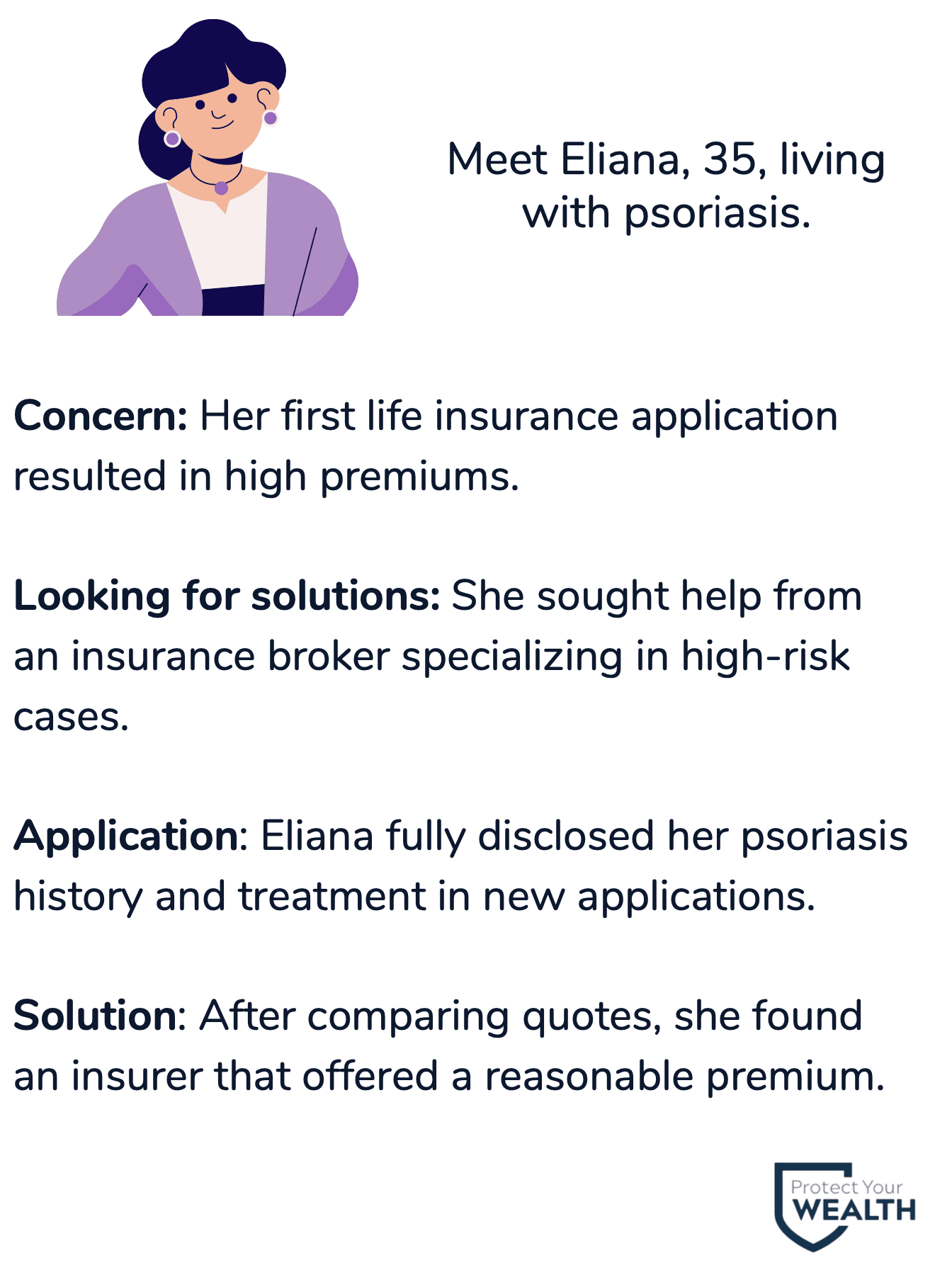
Eliana, a 35-year-old software engineer, was diagnosed with moderate plaque psoriasis when she was 25. For the past ten years, she has been managing her condition with topical treatments and biologics, maintaining regular follow-ups with her dermatologist. Eliana has also adopted a healthy lifestyle, incorporating regular exercise and a balanced diet into her routine, and she does not smoke or drink excessively.
When Eliana decided to apply for life insurance, she initially faced some challenges. Her first application with a major insurance company was met with a higher-than-expected premium quote. The insurer justified the higher rate by citing her psoriasis as a potential risk factor.
Rather than accepting the first quote, Eliana decided to seek the help of an independent insurance broker who specializes in high-risk cases. The broker was able to assist Eliana in navigating the insurance landscape, identifying insurers known for their more lenient underwriting processes regarding chronic conditions like psoriasis.
With her broker’s help, Eliana applied to several of these insurers, fully disclosing her psoriasis condition, the treatments she was undergoing, and her overall health management strategies. She also included medical records from her dermatologist, demonstrating a decade-long history of proactive management and control of her psoriasis.
After comparing several quotes, Eliana found an insurance company that provided a more reasonable premium. This insurer had a deeper understanding of psoriasis and acknowledged Eliana’s consistent management of her condition and overall healthy lifestyle.
Eliana’s journey underscores the importance of understanding your health condition, managing it effectively, and not settling for the first insurance quote you receive. Her case highlights that, with persistence and the right assistance, individuals with psoriasis can indeed secure favorable life insurance policies.
How Does Having Psoriasis Impact Eligibility for Life Insurance?
Psoriasis, as a chronic health condition, can have an impact on your eligibility and the premiums you pay for life insurance. However, it doesn’t automatically disqualify you from getting a policy. Here’s how it might affect your application process:
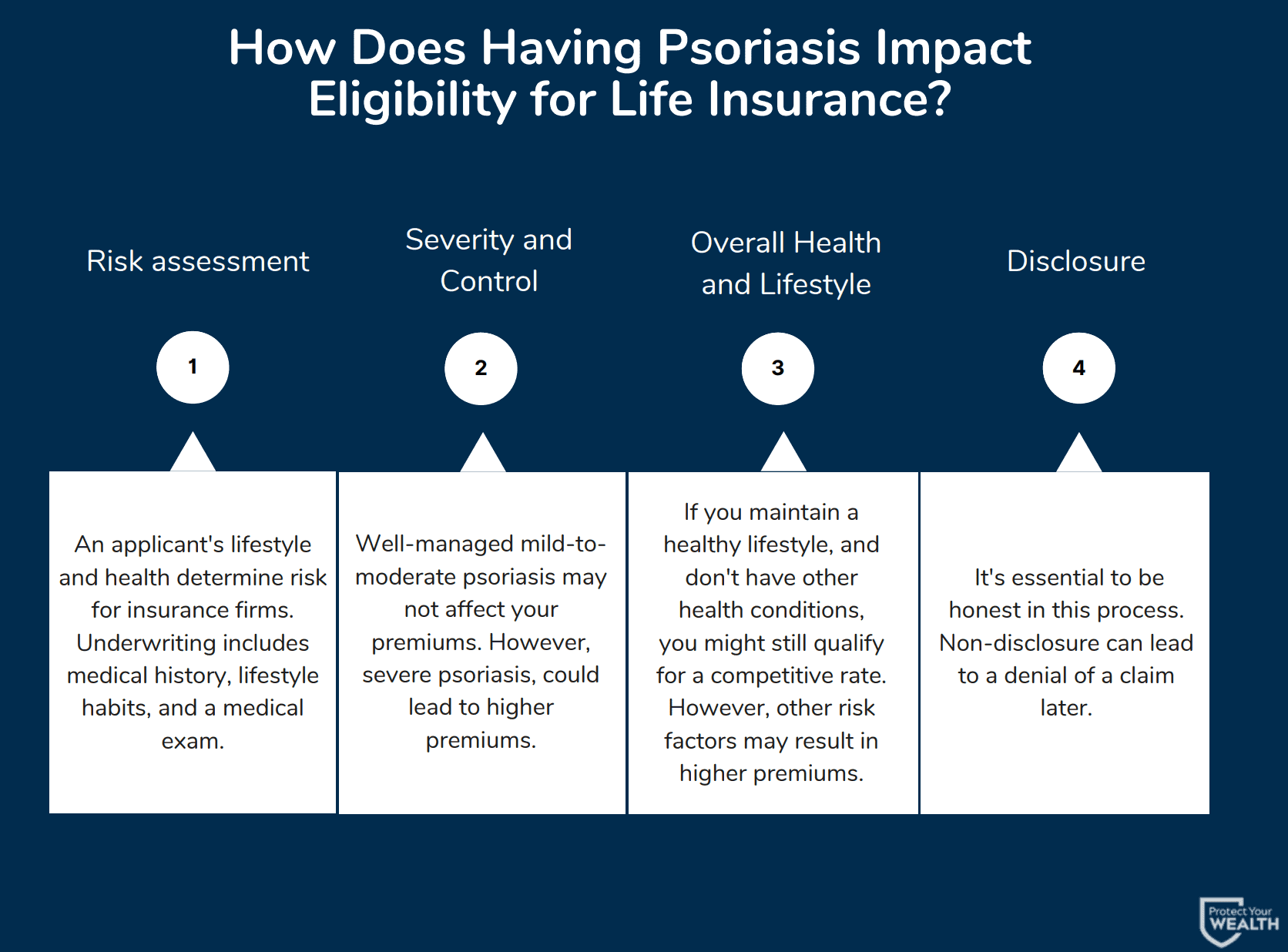
- Risk Assessment: Insurance companies assess risk by evaluating an applicant’s overall health and lifestyle. This assessment, known as underwriting, involves reviewing medical history, lifestyle habits, and sometimes a medical examination.
- Severity and Control of Psoriasis: The impact of psoriasis on your life insurance largely depends on the severity of your condition and how well it’s controlled. Mild to moderate psoriasis that’s well-managed may not significantly impact your premiums. However, severe psoriasis, especially with complications like psoriatic arthritis, could lead to higher premiums because of the associated increased risk for other health issues, including cardiovascular disease.
- Overall Health and Lifestyle: Insurance companies look at the big picture of your health. If you have psoriasis but maintain a healthy lifestyle, don’t smoke, and don’t have other health conditions, you might still qualify for a competitive rate. However, a combination of psoriasis with other risk factors, like obesity or smoking, may result in higher premiums.
- Disclosure: When applying for life insurance, you’re required to disclose your health conditions, including psoriasis. It’s essential to be honest in this process. Non-disclosure can lead to a denial of a claim later.
Why Might Having Psoriasis Affect Life Insurance Premiums?
Life insurance premiums are determined by risk assessment. The higher the premium, the greater the anticipated risk of the policyholder dying prematurely. This risk assessment considers a variety of characteristics such as age, gender, lifestyle habits (such as smoking or drinking), occupation, family medical history, and personal health history.
Psoriasis is a chronic autoimmune disease that not only affects the skin but can also have systemic effects and be linked to other health issues. Here’s why having psoriasis might affect life insurance premiums:
- Degrees of Psoriasis and Management Effectiveness: The degree of your psoriasis and the effectiveness of its management are influential factors in determining your life insurance premiums. Premiums may barely fluctuate if your psoriasis is of a milder nature and consistently well-managed. In contrast, premiums may escalate if you grapple with a more severe form of psoriasis or if the condition isn’t under effective control. This is attributed to the potential complications that can arise from severe or uncontrolled psoriasis, which can signal broader challenges in managing personal health.
- Associated Health Risks: Psoriasis, especially severe cases, has been linked to an increased risk of certain other health conditions, including psoriatic arthritis, cardiovascular diseases, metabolic syndrome, and mental health issues. If you have psoriasis, insurers might consider you at higher risk of these associated conditions, which could lead to increased premiums.
- Impact on Lifespan: While psoriasis itself is not life-threatening, the conditions associated with it, such as heart disease, can potentially impact lifespan. Insurance companies take this into account when calculating premiums.
It’s important to remember that each insurance company has its own underwriting criteria, and these can vary widely. Some insurers may have more experience and knowledge about psoriasis and understand that many people with the condition live healthy, normal lives. Therefore, it’s always a good idea to shop around and work with an experienced insurance agent who can help you find the best policy for your individual circumstances.
What Medical Information Will Insurers Likely Want to Know About a Person’s Psoriasis
When applying for life insurance, insurers will want to gather a comprehensive understanding of an applicant’s psoriasis. This allows them to accurately assess the risk associated with the policy. Here’s the kind of information they might require:
- Psoriasis Classification: Insurers will want to know the specific type of psoriasis you have, be it plaque psoriasis, guttate psoriasis, inverse psoriasis, pustular psoriasis, erythrodermic psoriasis, or psoriatic arthritis. Each type has different characteristics and may be associated with varying levels of risk.
- Degree of Severity: The severity of your psoriasis can significantly influence the risk assessment. Mild cases that cover less than 3% of the body may be less of a concern than moderate to severe cases that cover more than 10% of the body or cause significant systemic symptoms.
- Diagnosis Timeline: Insurers will be interested in when you were first diagnosed with psoriasis. A recent diagnosis might raise different considerations than a condition that has been managed for many years.
- Treatment Plan and Adherence: Information about your current treatment regimen and your consistency in following it is essential. This includes topical treatments, phototherapy, oral medications, or biologics. Regular follow-ups with your healthcare provider can also indicate effective management of the condition.
- Associated Health Conditions: Psoriasis can be associated with several other health conditions, such as psoriatic arthritis, cardiovascular disease, diabetes, and depression. Insurers will want to understand if you have any such co-existing conditions.
- Impact on Lifestyle: If psoriasis significantly impacts your ability to carry out daily activities or work, it may be considered a higher risk factor.
- Flare-ups: The frequency and triggers of your psoriasis flare-ups can provide insight into the stability and predictability of your condition.
By gathering this information, insurers can make a more accurate assessment of the potential risk and thus determine the appropriate terms and premiums for your life insurance policy.
How Can Individuals With Psoriasis Find the Best Life Insurance Rates?
Finding the best life insurance rates when living with psoriasis may require a bit more effort, but it’s certainly achievable. It starts with maintaining control of your condition through consistent treatment and regular healthcare visits, as insurers favor applicants who actively manage their health. Next, adopt a healthy lifestyle that includes regular exercise, balanced nutrition, and refraining from habits like smoking, which can exacerbate psoriasis and increase risk factors for other health conditions.
When it comes to applying for life insurance, honesty is key. Fully disclose your health condition and provide comprehensive details about the type, severity, treatment, and impact of your psoriasis on daily life. This transparency allows insurers to make an accurate risk assessment, and it avoids potential claim disputes in the future due to non-disclosure.
Furthermore, consider working with an independent insurance broker or agent. These professionals can help you navigate the variety of available policies and insurers, some of whom may have more favorable underwriting standards for individuals with psoriasis. They can assist you in comparing rates and finding the best policy that suits your circumstances.
Lastly, don’t be disheartened if the first quote you receive seems high. Life insurance companies differ in their underwriting processes and risk tolerance. Therefore, it’s essential to shop around and explore options from various companies. Remember, the goal is not just to find the cheapest policy, but the one that provides the most suitable coverage given your unique situation.
Types of Life Insurance for Individuals With Psoriasis
There are several types of life insurance that individuals with psoriasis may consider. Here are a few options:
- Term Life Insurance: This is the most basic and generally the most affordable type of life insurance. It provides coverage for a specific period of time, such as 10, 20, or 30 years. If the policyholder dies during this term, the death benefit is paid out to their beneficiaries. This type of insurance might be suitable for individuals with mild to moderate psoriasis who are in otherwise good health.
- Permanent Life Insurance: This type of insurance provides lifelong coverage and has a cash value component that grows over time. The two main types of permanent life insurance are whole life and universal life. This might be a suitable choice for individuals with psoriasis who want to combine a death benefit with a savings or investment component.
- No Medical Exam Life Insurance: Some insurance companies offer policies that do not require a medical examination. However, these typically have higher premiums and may have lower coverage limits. They often still require you to answer health questions, and your answers could affect your eligibility and rates. This could be a viable option for individuals with severe psoriasis who may not qualify for other types of life insurance.
- Guaranteed Issue Life Insurance: This is a type of permanent life insurance that does not require a medical exam or health questionnaire. As long as you’re within the age limits set by the insurer, you can get this type of policy. However, premiums are typically higher, and the death benefit may be lower than other types of life insurance. This might be an option for individuals with severe psoriasis or associated health issues who have been denied coverage elsewhere.
- Group Life Insurance: If you are employed, your employer may offer group life insurance as part of your benefits package. These policies typically don’t require a medical exam or individual risk assessment, so your psoriasis won’t affect your premiums. However, the coverage amount might be less than what you could get through an individual policy, and you generally lose coverage if you leave the job.
As with any insurance policy, it’s essential to shop around and compare quotes from different insurers. An experienced insurance agent or broker can help you understand your options and find a policy that fits your needs and budget. It’s also beneficial to maintain a healthy lifestyle and effectively manage your psoriasis, as this can positively influence your insurability and premiums.
Tips for Finding a Psoriasis-Friendly Insurance Company

- Work with an Independent Insurance Broker: An independent insurance broker can help you navigate the insurance market, understand various policies, and find the companies that have more favorable underwriting standards for people with psoriasis.
- Shop Around: Don’t limit yourself to one insurance company. Different insurers may evaluate the risk of psoriasis differently, so it’s worth getting quotes from multiple companies.
- Look for Specialized Insurers: Some insurers specialize in high-risk or pre-existing conditions and may have more experience and understanding of psoriasis.
Always remember to manage your psoriasis effectively and maintain a healthy lifestyle. These are key factors that insurance companies consider when determining your premiums.
Conclusion
It can be difficult to navigate the world of life insurance if you have psoriasis, but it’s important to note that psoriasis does not make you ineligible for life insurance. Understanding your condition, managing it effectively, and living a healthy lifestyle are essential steps in locating an appropriate policy. Transparency regarding your health during the application process is of equal importance. With the assistance of an experienced insurance broker, you can locate insurance companies that take into account your unique circumstances, not just your psoriasis, and offer you the most competitive rates. Remember that the goal is to locate an insurance policy that provides peace of mind and financial protection for you and your loved ones, not just any policy. As you proceed along this path, keep in mind that there are options and resources available to assist you in achieving this important life goal.
Frequently Asked Questions (FAQs) about Life Insurance with Psoriasis
Yes, having psoriasis does not automatically disqualify you from getting life insurance. The severity of your psoriasis, how well it’s managed, and your overall health will play a role in determining your eligibility and premiums.
Possibly. Insurance companies assess risk based on a variety of factors, including your health. The type, severity, and control of your psoriasis, as well as any related health conditions, could affect your premiums. However, each insurance company’s underwriting process is different, so rates can vary.
Yes, you should always be honest and thorough when providing health information on a life insurance application. Failure to disclose your psoriasis could result in a denial of a future claim or the cancellation of your policy.
Don’t be disheartened. Each insurer has its own underwriting criteria, and decisions can vary. You can apply to other insurance companies or consider options like no medical exam life insurance or guaranteed issue life insurance. Working with an independent insurance broker can also help you find companies that may be more lenient with psoriasis.
Manage your psoriasis effectively through consistent treatment, maintain a healthy lifestyle, avoid habits like smoking that can worsen psoriasis, and work with an experienced insurance broker who can guide you to the most psoriasis-friendly insurers. Also, shop around and compare rates from various insurance companies.
While there may not be companies specializing solely in insuring people with psoriasis, some insurers are more experienced and understanding when it comes to underwriting policies for people with chronic health conditions like psoriasis. An insurance broker can help you find these companies.
Remember, every individual and every case of psoriasis is unique, so what works for one person may not work for another. It’s always a good idea to consult with an insurance professional or financial advisor to understand your options and find the best policy for your circumstances.
Find a solution for what you’re looking for
Despite the challenges, securing life insurance with psoriasis is achievable, offering both peace of mind and a safety net for the future, ensuring you and your loved ones are financially protected no matter what life throws your way. At Protect Your Wealth, we work with and compare policies and quotes from the best life insurance companies in Canada to ensure the best solution for you and your needs. We provide expert life insurance solutions, including no medical life insurance, critical illness insurance, term life insurance, and permanent life insurance to build the best package to give you the protection you need.
To schedule a consultation about your income protection goals, or if you have any questions about insurance in Ontario or Canada, please contact Protect Your Wealth or call us at 1-877-654-6119 to talk to an advisor today! We’re proudly based out of Hamilton, and service clients anywhere in Ontario, British Columbia and Alberta including areas such as Kingston, Brampton, Red Deer, and Burnaby.



Leave A Comment